Introduction to Kong Gateway
Kong Gateway is an open-source API Gateway, designed to serve as the single entry point for microservices systems. Kong provides routing, security, monitoring, scaling and flexible traffic management features, suitable from startups to large enterprise systems. Built on high-performance platform (Nginx + LuaJIT), Kong can handle thousands of requests/s with low latency and flexible scaling capabilities.
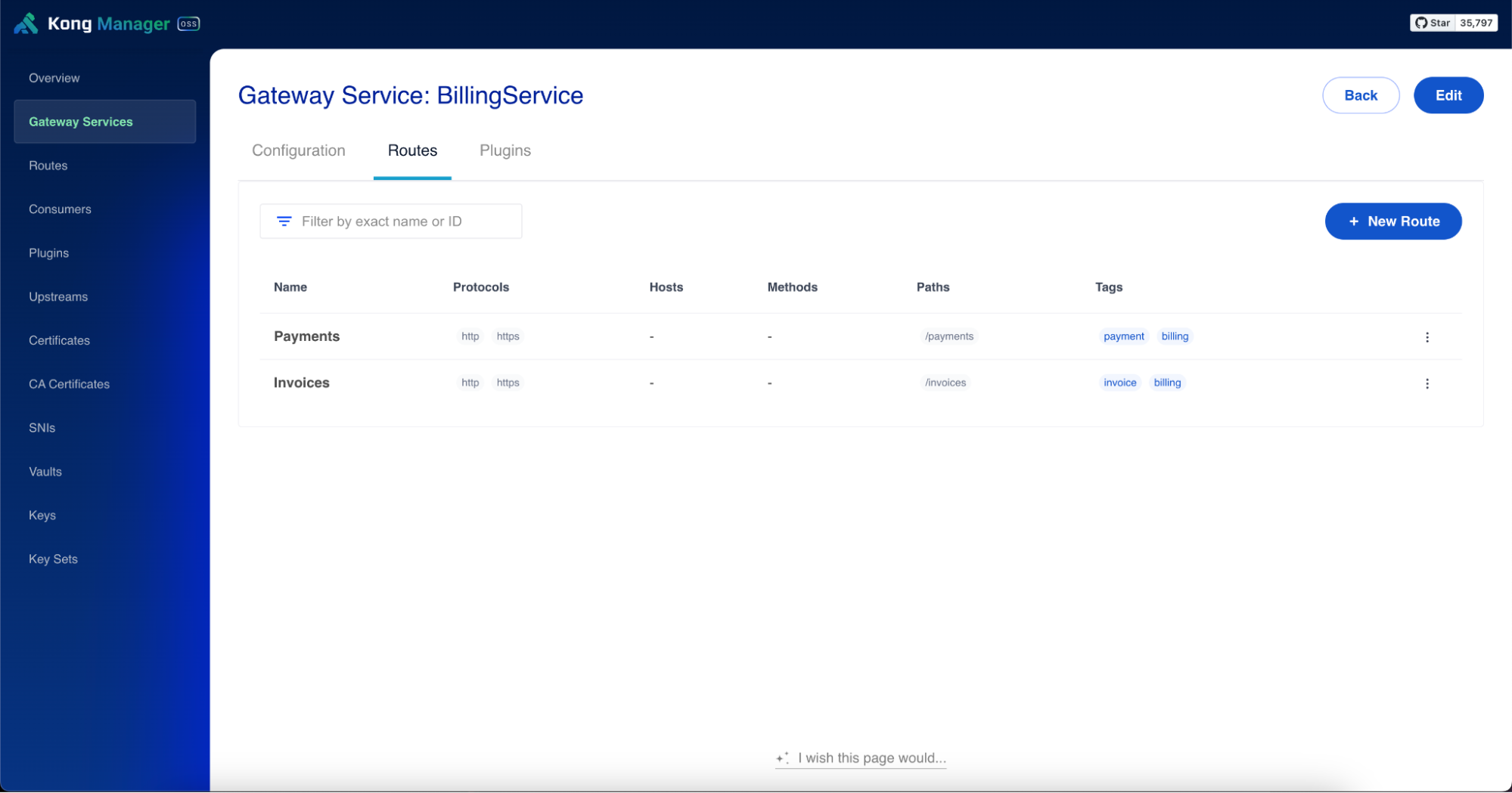
Main Components of Kong Gateway
1. Core Gateway with function to receive HTTP(S) requests, validate input, route to internal services and return response to client. Integrates and supports protocols like REST, gRPC, GraphQL, TCP.
2. Plugin System is Kong’s strongest point with ecosystem of over 400+ plugins (free and paid), helping easily add security, logging, rate limit, cache, transformation, authentication, monitoring functions. Notable plugins:
- Authentication (JWT/OAuth2, Keycloak, LDAP).
- Rate Limiting, ACL.
- Logging (Syslog, Prometheus, Datadog).
3. Admin API provides RESTful API to manage dynamic configuration – declare service, route, enable/disable plugin without downtime.
4. Automate Supports automation/CI-CD through scripts and IaC integration.
5. Data Store Stores configuration of all routes/services/plugins using PostgreSQL or Cassandra.
6. DB-less Mode Can run in database-free mode (DB-less) for stateless environment, suitable with Kubernetes.
7. Manager UI (Kong Manager) Management interface: Visual dashboard (enterprise version) allows gateway, users, plugin, traffic analytics management.
Typical Applications
Serve as API Gateway for microservices architecture, protecting backend systems.
Manage traffic, rate limit, logging and centralized API monitoring.
Notes when installing Kong Gateway
In this Workshop we will perform Kong Gateway installation through Helm Chart and deploy on EKS. We will install PostgreSQL Database and configure it to store Kong Gateway configuration, Database will be deployed in a separate pod.
When installing Kong Gateway using Helm Chart, we need to configure values.yaml files containing necessary information about Kong Manager, Kong Admin API, Kong Proxy, Database. We will use ALB Ingress Controller to be able to access Kong Gateway management interface.
Installation steps will be presented in detail in section ….